

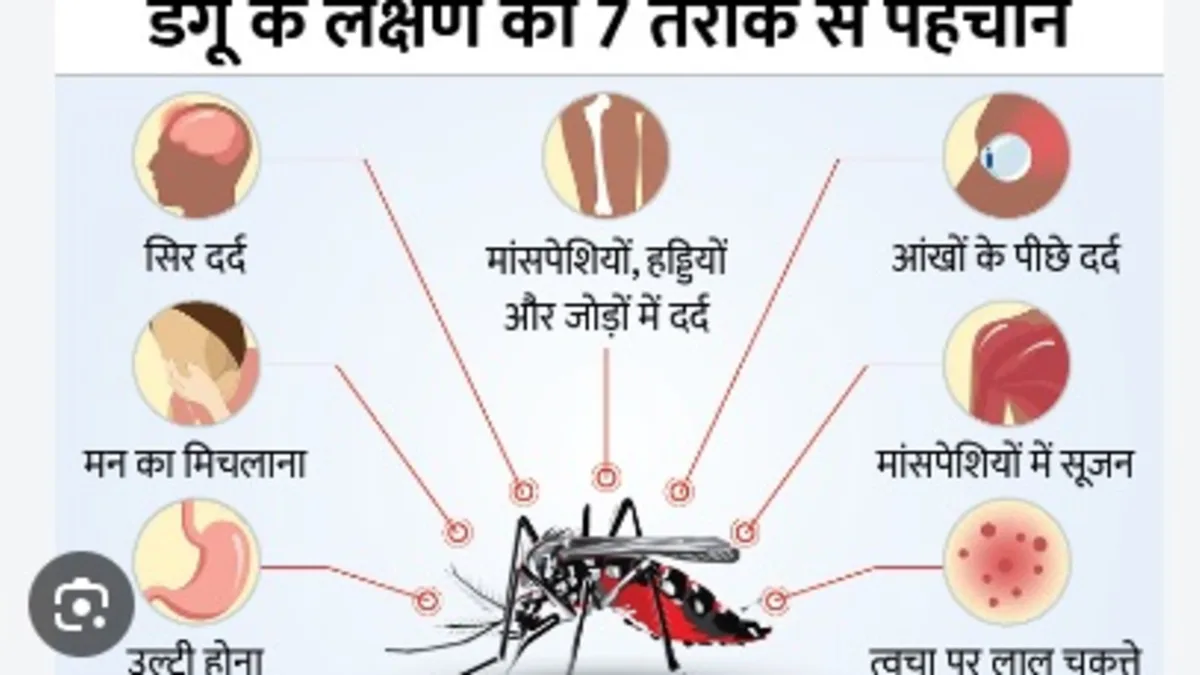
ASANSOL. To enjoy Durgotsav, do not be careless about your health. Dengue has emerged as a major challenge in West Bengal. According to the information posted on the state health department's website, 3,700 people were tested for dengue, out of which 128 tested positive. A total of 256 people are hospitalized due to dengue. The government has issued guidelines stating that the NS-1 antigen ELISA test must be taken within the first five days of getting a fever to detect dengue. After five days, the IgM test should be taken.
Seeing the gravity of the situation, Health Minister Dr. Sharadwat Mukherjee held a meeting with seven municipal corporations, six municipalities, all medical colleges, and district magistrates of the state. Commissioners of AMC, DMC, KMC, HMC, Siliguri, and Bidhannagar were present. The total number of infected patients in the state is 9,000. Murshidabad is the most affected. Kolkata, North 24 Parganas, South 24 Parganas, and Hooghly are second. Guidelines issued after the meeting stated that strict monitoring is needed for the first three to five days of dengue fever. Urine, sleep, seizures, or any other physical changes in the patient should be monitored. Family members should also be informed about this. If the patient feels stomach pain, frequent vomiting, extreme weakness, seizures, unconsciousness, or bleeding from any part of the body, they should immediately contact a health center. The real danger of dengue often begins after the fever subsides. Therefore, it is important to keep the patient under observation even after the fever drops. The NS-1 antigen ELISA test should be done within the first five days of fever. After five days, the IgM test should be performed. If the fever lasts for more than 10 days, tests should be conducted not just for dengue, but also for other infections like leptospirosis or scrub typhus.